
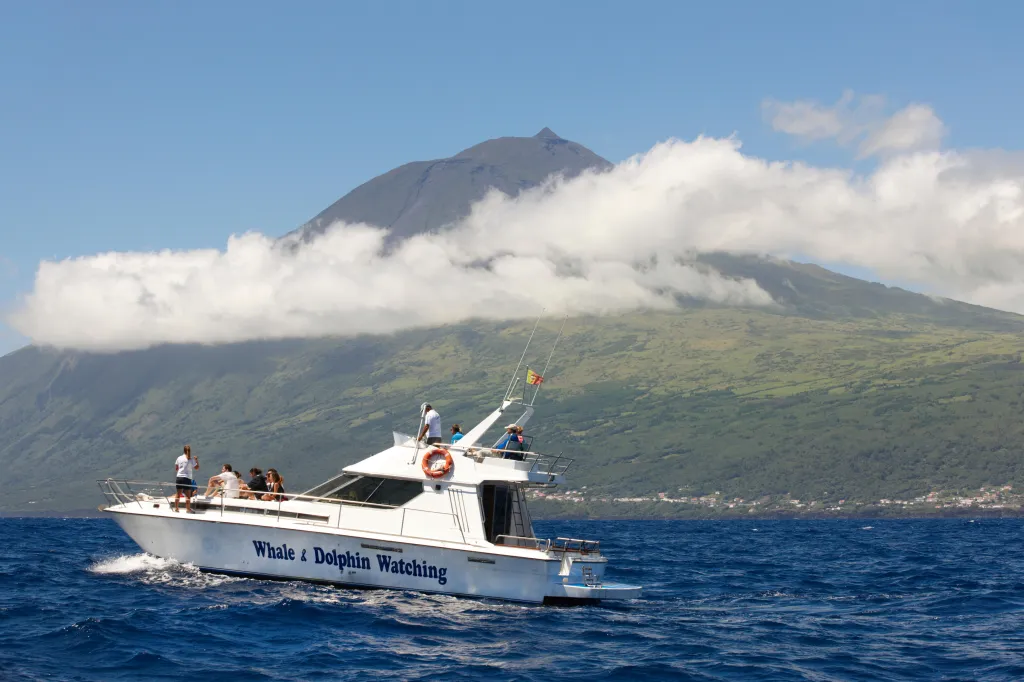
On Pico Island, the hilltop huts that once directed harpoon boats toward sperm whales now serve science and tourism. These vigia lookouts, staffed by spotters scanning the Atlantic, still call the shots — no boat leaves Lajes do Pico until a spotter confirms a sighting. That heritage is the first thing to understand before weighing whale watching azores prices, because the whole operation is built around wild animals, not a fixed schedule. Which is why a single ticket number is hard to pin down. A visitor comparing costs is really comparing formats: a small rigid-hull RIB that skims the swell against a steadier catamaran with a marine biologist aboard, a shorter coastal loop against a longer run toward deeper water where blue whales and fin whales pass through. Each format carries its own fare, and each shifts with the season and how many cetaceans the vigia is tracking that week. The context that makes this make sense is the geography. Pico sits over one of the deepest stretches of the mid-Atlantic, and the shelf drops away close to shore. Sperm whales feed here year-round, which is unusual, so the island rarely sells the empty promise of a maybe. Operators know their odds, and that confidence is folded into what a Pico Island whale watching tour is worth rather than simply what it lists for. So the practical move is to treat any headline figure as a starting point, not gospel. Look at what the fare includes — briefing, hydrophone listening, a guaranteed re-trip if no whale surfaces — before judging whether observação de baleias here is dear or fair. The dedicated pricing and value sections on this site lay out the current rates and the comparisons in detail; this page simply frames why they read the way they do. Anyone still puzzled by whale watching azores prices should start from the booking office hours and the official operator's site, then match a tour length to their sea legs and their budget.
“The figure a visitor chases is never the ticket price alone — it is the confidence that a wild whale will surface.”
Whale Watching Azores Prices for Individual Tours and Packages
Excursion rates for Espaço Talassa in Lajes do Pico depend on the departure month and tour type.
An adult typically pays 75 EUR for the standard Queimada excursion during the peak summer months, with the price dropping to 49 EUR in the low season.
Whale Watching Azores Prices: Operator Comparison on Pico Island
Visitors looking to book a whale watching excursion on Pico Island typically decide between two pioneering operators: Espaço Talassa, departing from the historic south coast in Lajes do Pico, and CW Azores, operating from the western harbor in Madalena.
|
Top pick Espaço Talassa Lajes do Pico (South Coast) |
CW Azores Madalena (West Coast) | |
|---|---|---|
| Standard Ticket Price | €59.00 - €75.00 per adult | €79.00 per adult |
| Tour Duration | 3 hours | 3 - 4 hours |
| Vessel Options | Semi-rigid inflatable boats (12 - 24 passengers) | Semi-rigid inflatable boats and aluminum cabin boats |
| Departure Location | Cais da Madalena, Madalena | |
| Lookout System | Land-based lookout (Vigia da Queimada) and hydrophones | Land-based lookouts (Vigias) and hydrophones |
Verdict: Select Espaço Talassa if you want to depart from the historic whaling town of Lajes do Pico with lower seasonal rates, or choose CW Azores for convenient departures directly from the ferry hub of Madalena.
Seasonal Shifts in Whale Watching Azores Prices
The best window is late April to June, when migratory baleen whales join resident species, providing high biodiversity before summer peak pricing begins.
Late June to Early September
Peak summer crowdsWarm, averages 22°C–25°C
Rates reach their seasonal high and boat seats fill quickly. Spotters easily track summer resident species like sperm whales and spotted dolphins.
May to Mid-June
Moderate attendanceMild, temperatures around 17°C–20°C
Mid-season pricing applies during this key migration window. You get the highest chance of seeing blue, fin, and sei whales.
October to November
Minimal crowdsCool, averages 15°C–18°C
Prices drop to the seasonal low before winter closure. Tours focus on resident species, though operations depend heavily on sea conditions.
Morning check-in (08:30–09:00)
Calm passenger volume—
Morning seas are typically flatter, making sightings easier.
Verdict: Tuesday to Thursday, morning check-in at 08:30, from May to early June.
What to Expect During Your Azores Cetacean Excursion
This walkthrough suits first-time visitors who want to know how a standard Espaço Talassa excursion unfolds from check-in to return, running roughly three hours end to end.
Check-in and briefing
Lookout tower coordination
Land-based spotters (vigias) scan the sea from cliff-top towers and radio sightings to the crew, setting the route before you board.
Boat boarding
Collect your lifejacket and board the RIB or catamaran at the marina; the crew confirms seating and briefs on handholds for the ride out.
Active sea observation
The boat moves to positions relayed by the vigias to watch cetaceans at a respectful distance, adjusting course as animals surface.
Return to Lajes
Cruise back to the harbour after the observation window closes, with the crew recapping which species were logged during the trip.
Insider Tips to Save on Pico Island Boat Trips
Maximize your travel budget on Pico Island by using strategic booking methods for whale watching.
Multi-trip package savings
Buying multi-trip packages lowers the average cost per outing compared to booking single tickets. This strategy is ideal because marine mammal sightings vary day by day.
Leverage group discounts
Inquire about discounted rates if booking for four or more passengers. Operators often reduce individual prices for small groups when registered under a single transaction.
Choose RIBs for value
Select rigid inflatable boats rather than larger passenger vessels when available. RIBs travel faster to coordinates provided by land-based lookouts, ensuring more actual wildlife viewing time for your money.
Direct booking benefits
Combine tours and lodging
Look for combined accommodation and excursion bundles offered by local operators. Bundling your stay with boat trips provides a lower overall price than booking them separately.
Split charter costs
If traveling with a larger group, check the pricing for a private RIB charter. When split among eight or more passengers, a private boat can sometimes cost less per person than individual tickets.
Check availability
FAQ: Whale Watching Azores Prices
Everything you need to know about whale watching azores prices