
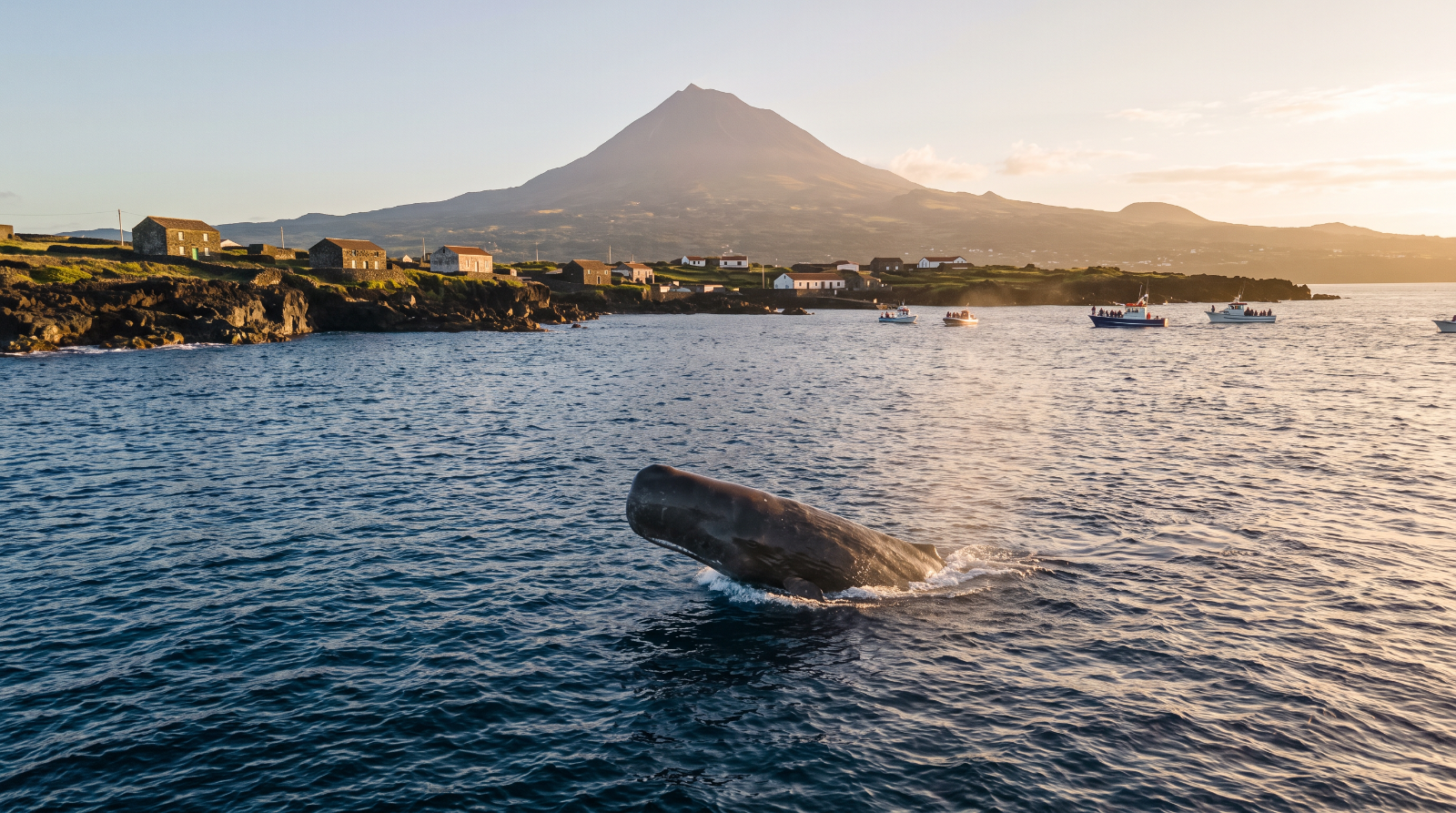
Quick answer
Pico Island Azores whale watching runs from a free visitor centre at Rua dos Baleeiros, open 08:30–20:00 every day. Sightings are most reliable on morning departures between 08:30 and 13:30, when the sea stays calmest. Tour prices vary by operator, but the centre itself charges no entrance fee, so planning costs nothing until you commit to a boat.
The waters off Pico Island drop to more than a thousand metres a short distance from the harbour, which is why sperm whales feed here within sight of land. That underwater shelf, not luck, is what makes pico island azores whale watching so consistent: the animals do not need to travel far, and neither do the boats that follow them. Most trips still rely on a tradition older than any GPS. Spotters called vigias scan the horizon from clifftop lookouts, radioing coordinates down to the crews below — a method inherited from the island's whaling era, when the same trained eyes hunted rather than photographed. Today those lookouts guide observação de baleias toward blue whales, fin whales, dolphins and resident sperm whales, and the hit rate stays high because the search begins on land. Visitors reading this page are usually weighing logistics: where to start, what the centre costs, and how much of the day to set aside. The answer is simpler than at most Atlantic destinations. Operations centre on Lajes do Pico, where a free visitor centre orients newcomers before any departure and where staff explain which cetaceans have been sighted that week. Espaço Talassa and its neighbours line the same seafront, so comparing a Pico whale watching tour is a matter of walking a few doors rather than crossing the island. What the reader should do with the answer is treat the free centre as the anchor. Arrive, confirm current conditions, then decide on a trip once the vigias report movement. Because sightings depend on real animals rather than a timetable, flexibility matters more than any fixed plan. For anyone comparing Azores islands, pico island azores whale watching remains the reference point: deep water, an unbroken lookout tradition, and a shoreline built around the sea rather than around tourism. The practical detail lives in the sections that follow — this passage is the frame around them.
“The search for whales off Pico begins not at sea but on land, where lookouts have scanned the same horizon for generations.”
Best Seasons for Pico Island Azores Whale Watching
The primary whale watching season runs from mid-March to October, with the daily window of 08:30–13:30 offering the calmest sea conditions for sightings.
Spring (Mid-March to May)
Moderate visitor numbersMild, 14°C to 17°C with rain
Migrating baleen giants like blue, fin, and sei whales pass through deep ocean channels during this window.
Summer (June to September)
Peak tourist seasonWarm and dry, 20°C to 25°C
Calm waters support resident sperm whale pods and newborn dolphin groups, with tours operating daily.
Autumn (October)
Quiet with fewer touristsCooler, 18°C to 21°C
Sperm whales remain active while passenger crowds decrease before operations scale down for the winter.
Daily morning slots
Steady tour departures—
Booking a trip during the 08:30–13:30 window ensures you catch the day's calmest seas, which significantly improves wildlife sightings.
Verdict: The best option is a morning trip scheduled between 08:30 and 13:30 in late April or May to optimize your chances of seeing migrating blue whales.
Getting to the Harbor for Pico Island Azores Whale Watching
The main harbor for Pico Island whale watching is located in Lajes do Pico along the island's southern coast. Travelers typically reach the island by flying into Pico Airport (PIX) from Lisbon or Ponta Delgada, or taking a passenger ferry from neighboring islands to Madalena or São Roque port before traveling overland to Rua dos Baleeiros.
Atlânticoline Ferry from Horta (Faial) to Madalena port
ER1 road south from Pico Airport to Rua dos Baleeiros in Lajes
Cristiano Limitada South Line from Madalena Gare Marítima to Lajes do Pico
The Whaling Heritage Behind Pico Island Azores Whale Watching
The hunt reached Pico by way of Yankee ships. American whalers, working the mid-Atlantic in the 1760s, recruited Azorean crews and taught the open-boat method. By the 19th century Lajes do Pico had grown into a whaling hub. Men rowed slim wooden canoas toward sperm whales, striking with hand harpoons. On shore, watchers called vigias scanned the horizon from stone lookouts, signalling each spout to the boats below. Prosperity followed the oil. Spermaceti and rendered blubber left Lajes for distant markets, and shore stations processed the catch well into the 20th century. The trade held on longer here than almost anywhere in Europe. Portugal outlawed commercial whaling in 1984, and the last sperm whales taken off Pico were landed in 1987. A way of life closed within a single generation. The turn came quickly. In 1989 Serge Viallelle founded Espaço Talassa in Lajes do Pico, converting the island's hunting knowledge into observation. The former harpooners' skill at reading the sea became the foundation of pico island azores whale watching. Crucially, the old vigias were not abandoned. Retired lookouts and their descendants now guide boats by radio, spotting the same spouts they once marked for the kill. That continuity defines pico island azores whale watching today. The Museu dos Baleeiros, opened in 1988, preserves the scrimshaw, harpoons and painted canoas of the hunt. A visitor walking Rua dos Baleeiros — the Whalers' Street — passes the boat sheds and slipways of the vanished industry. Along the cliffs above Lajes, the whitewashed vigia posts still stand, staffed once more. The tools of the hunt now serve the whale, and the island's Azores whale watching tours carry that inheritance onto the water.
American whalers introduce the open-boat method to the Azores, recruiting Pico crews.
Lajes do Pico grows into a sperm-whaling hub, hunting from slim wooden canoas.
Portugal outlaws commercial whaling, ending the Azorean trade.
The last sperm whales hunted off Pico are landed at Lajes.
The Museu dos Baleeiros opens in Lajes to preserve harpoons, scrimshaw and canoas.
Serge Viallelle founds Espaço Talassa in Lajes do Pico, launching organised whale watching.
Step-by-Step Guide to Booking Pico Island Azores Whale Watching
This walks you through a typical Pico Island excursion from reservation to boarding, a process that spans a few days of planning plus a briefing and trip lasting roughly a morning. Following each step in order keeps your spot secured and your departure smooth.
Reserve your place in advance
Contact the operator by phone at +351292672010 or through https://espacotalassa.com to hold a spot, since morning departures fill quickly and walk-up availability is not guaranteed. People often assume they can just show up on the day, which frequently leaves them without a seat.
Confirm your departure details
Check the meeting point at Rua dos Baleeiros, 9930-143 Lajes do Pico and note your assigned time when you reserve. The common mistake is misjudging how early to arrive, so build in a buffer before your slot.
Check in at the visitor centre
Arrive at the centre, where entry is free, to complete check-in and any remaining paperwork before the group forms. Many people head straight for the boats and miss the check-in desk, delaying the whole party.
Attend the biological briefing
Join the mandatory briefing where guides explain species you may see, boat conduct, and safety rules. Skipping or arriving late for this is not permitted, and stragglers can be held back from the departing group.
Board the zodiac
Follow the crew's instructions to board the inflatable and take your assigned position. Boarding is quicker when everyone is ready at the waterline rather than still gathering belongings.
Follow the land-based spotters
Once at sea, the skipper coordinates with vigias on shore who scan for blows and direct the boat. Understand that sightings depend on these spotters, so patience matters more than chasing every ripple yourself.
Expert Tips for Pico Island Whale Watching Tours
These expert recommendations help visitors prepare for the unique sea conditions and weather patterns of Pico Island whale watching.
Sit in the Back
On zodiac and semi-rigid boats, sit near the stern to minimize the physical impact when bouncing over Atlantic swells. The bow experiences much stronger upward and downward movement, which can quickly trigger motion sickness.
Take Medication Early
Consume seasickness remedies at least 30 to 60 minutes before boarding the vessel in Lajes do Pico. The active waters of the open ocean make it difficult for medication to settle if taken after departure.
Protect Your Camera Gear
Bring dry bags for all electronic equipment, including cameras and smartphones, as zodiacs are open to the elements. Saltwater spray is common during high-speed travel to whale sightings.
Layer for Cold Winds
Wear a windproof outer jacket over thermal layers, even during warm summer days. Air temperatures drop rapidly when moving quickly across the water several miles from the coast.
Wear Non-Slip Closed Shoes
Avoid wearing sandals or high heels on the boats. Sturdy, closed-toe shoes with rubber soles provide the necessary grip on wet, moving decks during departures.
Book Multiple Outings
Schedule more than one tour at the start of your stay to buffer against potential cancellations from rough sea states. Operators frequently rearrange bookings depending on wind conditions.
What to Visit Near the Whale Watching Base in Lajes do Pico
Lajes do Pico features a rich maritime heritage, making it easy to pair your whale watching excursion with a walk to historical landmarks. Several museums and lookout points reflecting the town's connection to the ocean are situated within walking distance of the main pier.
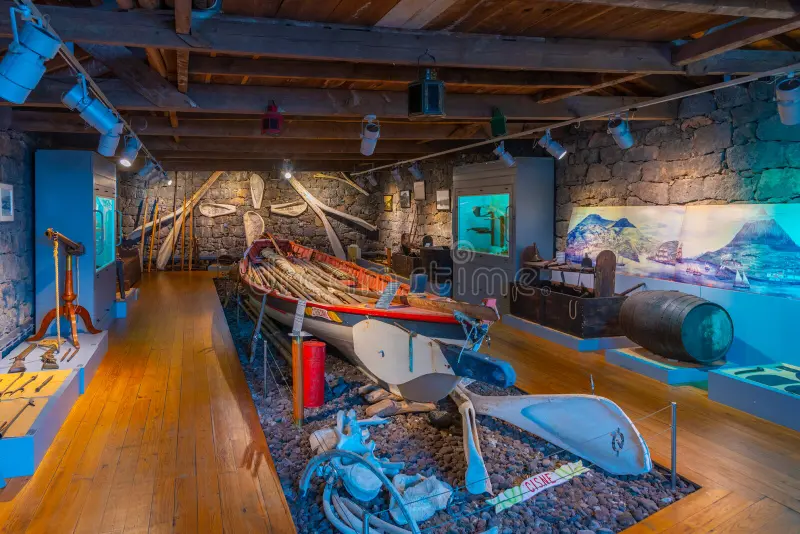
Whalers' Museum
This museum is situated on the same street as the departure point. It showcases original nineteenth-century whaling boats, traditional blacksmith tools, and intricate scrimshaw carvings made from whale teeth, providing historical context.
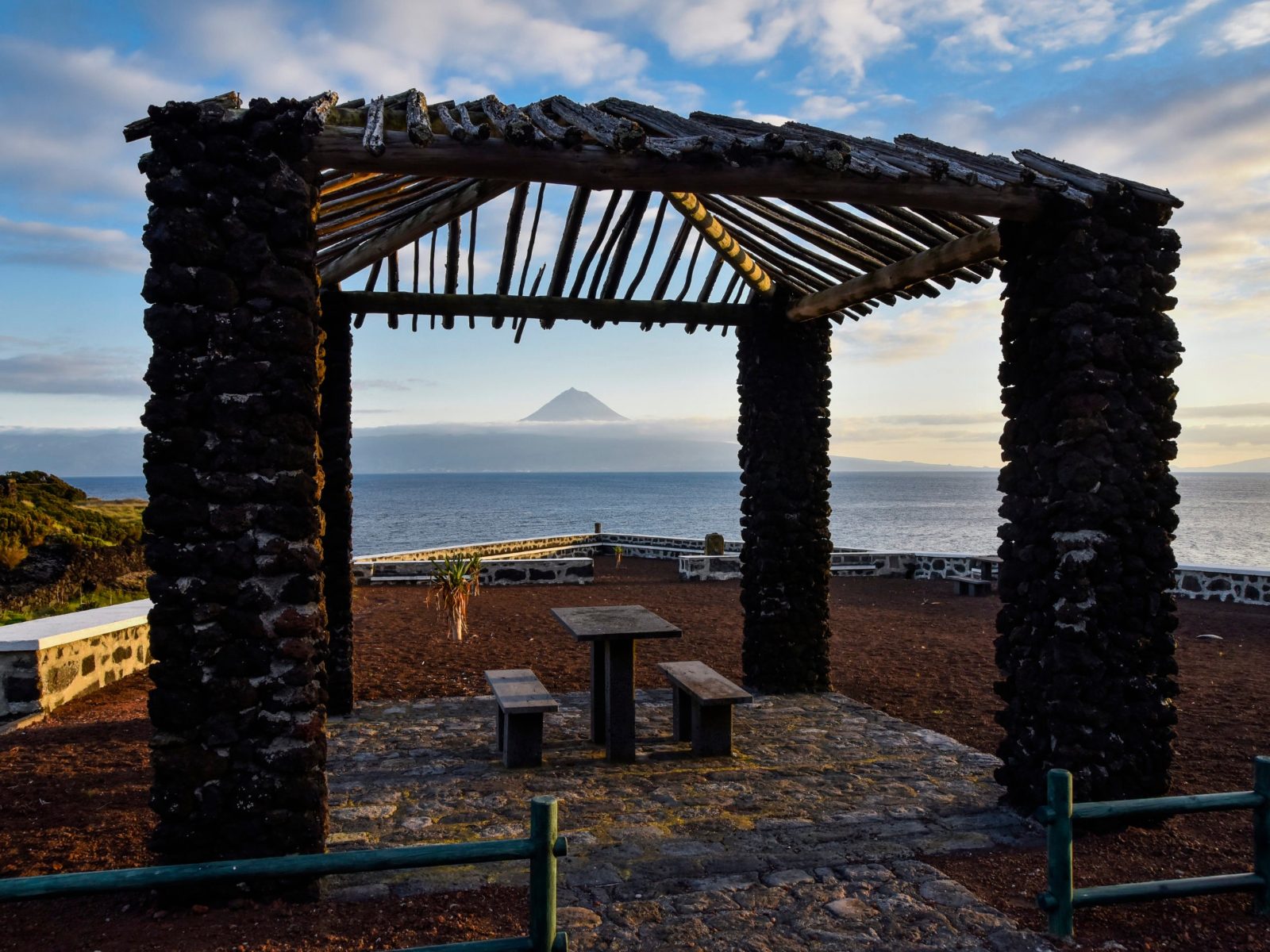
Vigia da Queimada
Set on a hillside path above the town, this former land lookout was used to spot cetaceans. Visitors can walk up to the tower to enjoy panoramic views of the coastline and see where land-based spotters locate whales.
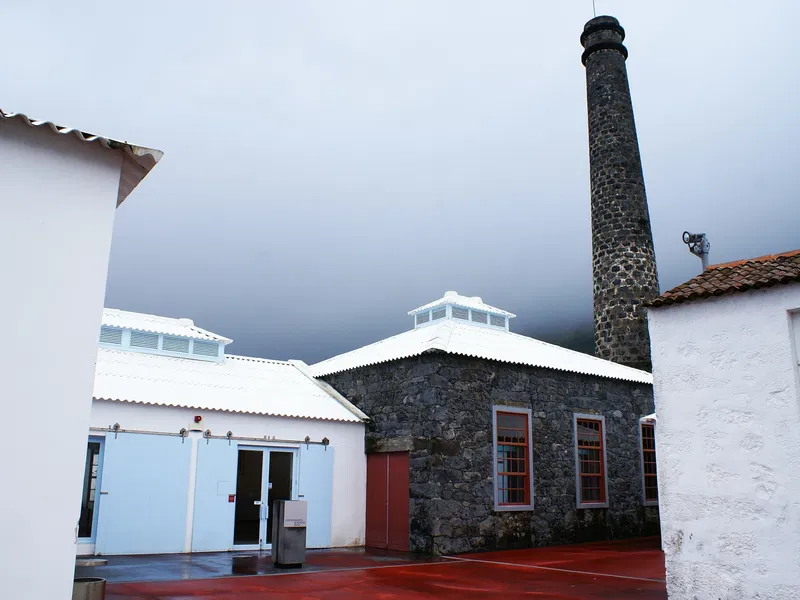
Centro de Artes e de Ciências do Mar
Located in the former SIBIL whaling factory, this space displays preserved industrial machinery. It features educational exhibits on marine biology, conservation, and the transition from hunting to protecting ocean life.
Opening Hours for Pico Island Whale Watching Booking Centers
The booking center in Lajes do Pico operates daily throughout the week, offering a consistent schedule for trip reservations and walk-in inquiries. Visitors can drop in to confirm their scheduled departures or speak directly with the team about upcoming sea conditions.
| Monday | 08:30–20:00 | Daily reservation assistance |
|---|---|---|
| Tuesday | 08:30–20:00 | Daily reservation assistance |
| Wednesday | 08:30–20:00 | Daily reservation assistance |
| Thursday | 08:30–20:00 | Daily reservation assistance |
| Friday | 08:30–20:00 | Daily reservation assistance |
| Saturday | 08:30–20:00 | Daily reservation assistance |
| Sunday | 08:30–20:00 | Daily reservation assistance |
Operating hours and tour frequencies are subject to seasonal adjustments during the winter months. Visitors planning trips outside the primary April to October window should verify schedules in advance.
Check availability
FAQ on pico island azores whale watching
Everything you need to know about pico island azores whale watching